

Categories
Change Password!
Reset Password!



A targeted physiotherapy trio; diaphragmatic breathing, Jacobson’s relaxation, and DNS—emerges as a potent, low-cost add-on that strengthens symptom relief in noncardiac chest pain linked to psychological and gastrointestinal causes.
A new randomized controlled trial has revealed that targeted physiotherapy techniques—specifically diaphragmatic breathing, Jacobson’s relaxation, and dynamic neuromuscular stabilization (DNS)—can substantially minimize symptoms of noncardiac chest pain (NCCP) caused by gastroesophageal reflux disease (GERD) and psychological stress.
NCCP continues to present widely in cardiology clinics across the world, despite the absence of cardiac disease. It frequently stems from psychological stress, gastroesophageal dysfunction, or both—yet current literature offers limited guidance on integrated, nonpharmacological solutions that can support conventional care.
With rising interest in techniques that stimulate parasympathetic activity—such as diaphragmatic breathing, Jacobson’s relaxation, and DNS—physiotherapy is increasingly viewed as a promising avenue for managing NCCP. Hence, the group of researchers aimed to test whether combining these physiotherapy techniques with medication could improve symptoms more successfully than pharmacological therapy alone. In this randomized controlled trial, 88 adults diagnosed with NCCP were randomly assigned to:
Endpoints like numerical pain rating scale (NPRS), beck depression inventory (BDI), hamilton depression rating scale (HDRS), and GERD questionnaire score were recorded at baseline and after 4 weeks. Baseline characteristics showed no difference between groups (p > 0.05). After 4 weeks, both groups improved significantly in depression, GERD symptoms, and pain (p < 0.001). However, the intervention group achieved better symptom control, especially for GERD severity and chest pain (Table 1).
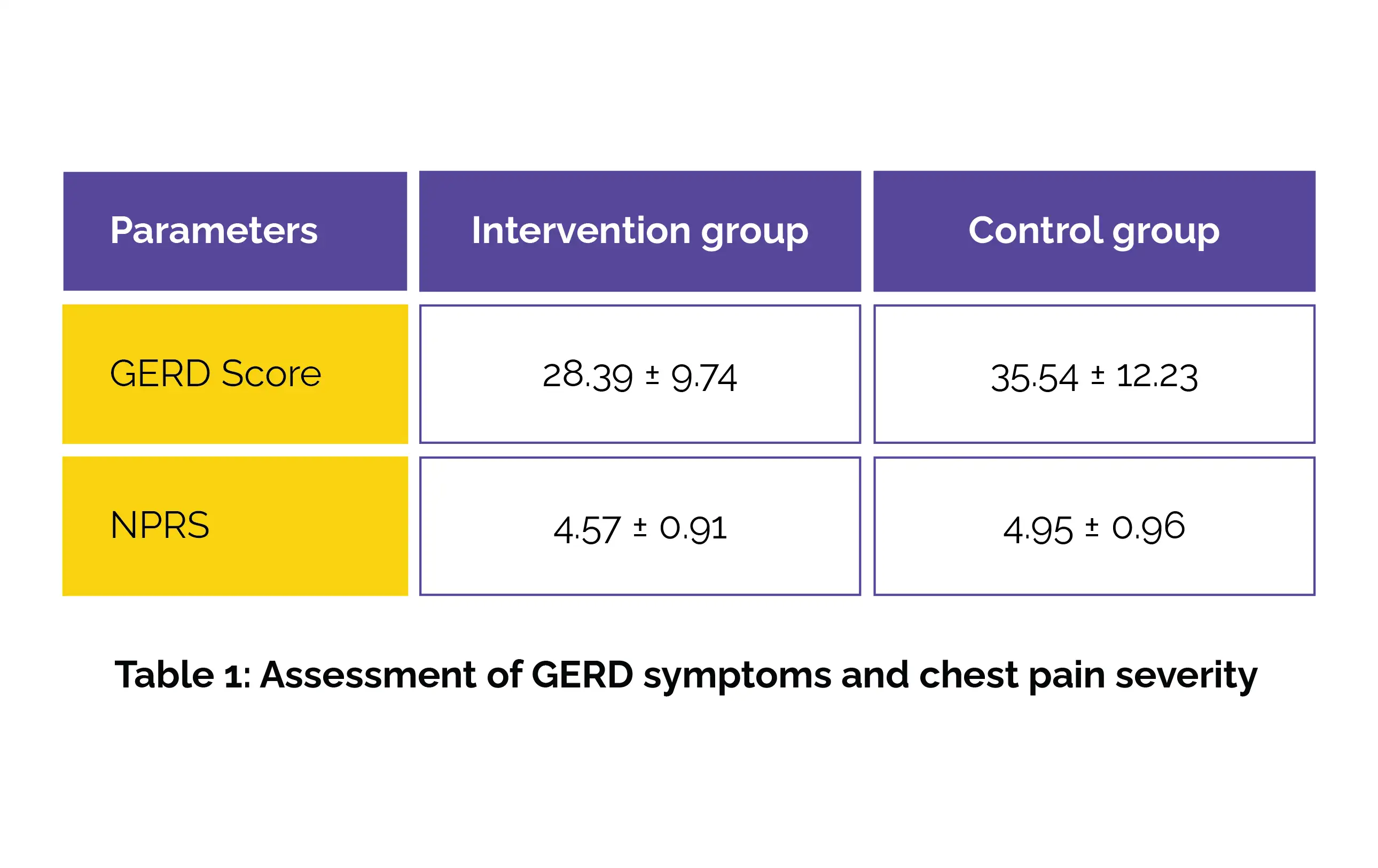
These results confirm that physiotherapy-based relaxation strategies provide added value over medication alone. The authors recommended integrating these techniques into routine NCCP management while encouraging future long-term studies to validate sustained benefits and optimize therapy models.
Pain Research & Management
Effect of Diaphragmatic Breathing Exercise, Jacobson's Relaxation Technique and Dynamic Neuromuscular Stabilization on Gastrointestinal and Psychological Causes of Noncardiac Chest Pain: A Randomized Controlled Trial
Anusha Rajesh Suryavanshi et al.












Comments (0)