

Categories
Change Password!
Reset Password!



Loxoprofen provides superior postoperative pain control after tonsillectomy with higher analgesic effectiveness than celecoxib, without increasing overall postoperative hemorrhage risk.
Post-tonsillectomy hemorrhage continues to be one of the most concerning complications in otolaryngology, even with ongoing advances in surgical and perioperative care. Analgesic choice plays a crucial role in postoperative outcomes, particularly because conventional non-steroidal anti-inflammatory drugs (NSAIDs) can impair platelet function and increase bleeding risk. A recent clinical study compared celecoxib, a selective cyclooxygenase-2 (COX-2) inhibitor, with the commonly used NSAID loxoprofen to assess differences in bleeding risk and pain control following tonsillectomy.
The study included 107 patients who underwent tonsillectomy and were categorized based on the postoperative analgesic prescribed. Overall, 55 patients received celecoxib, while 52 patients were treated with loxoprofen. Researchers determined analgesic effectiveness, adverse events, postoperative pain parameters, and the incidence, timing, and severity of postoperative hemorrhage.
Loxoprofen illustrated a higher overall effective pain relief rate when compared to the celecoxib group (Table 1).
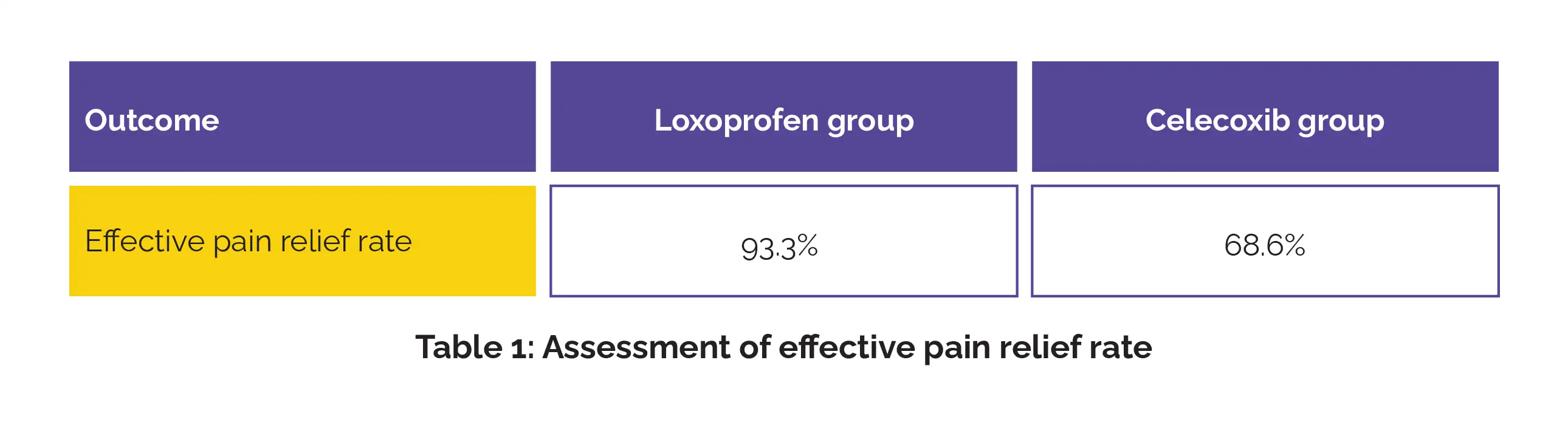
This difference was statistically significant. Despite this, no vital differences were noted between the groups in changes in visual analog scale (VAS) pain scores. Additionally, there were no vital differences in:
Celecoxib illustrated a favorable safety profile, with no reported adverse effects. In contrast, 8.0% of patients in the loxoprofen group experienced abdominal pain, highlighting a gastrointestinal tolerability advantage with celecoxib. Overall, postoperative hemorrhage trends and bleeding severity did not considerably differ between the groups. However, a notable difference emerged in late-onset hemorrhage, defined as bleeding occurring after the 11th postoperative day.
This difference was statistically significant, suggesting a potential protective impact of celecoxib against delayed postoperative bleeding. Thus, celecoxib may mitigate the likelihood of late-onset hemorrhage after tonsillectomy while offering excellent gastrointestinal safety. However, its standalone analgesic potency appears inferior to that of loxoprofen. The authors suggest that combining celecoxib with acetaminophen may yield balanced pain control while preserving its bleeding-risk advantage.
Nippon Jibiinkoka Tokeibugeka Gakkai Kaiho
A Comparison of Analgesic Effect between Loxoprofen and Celecoxib and the Frequency of the Hemorrhage Following Tonsillectomy
Tomohisa Hirai et al.















Comments (0)