

Categories
Change Password!
Reset Password!



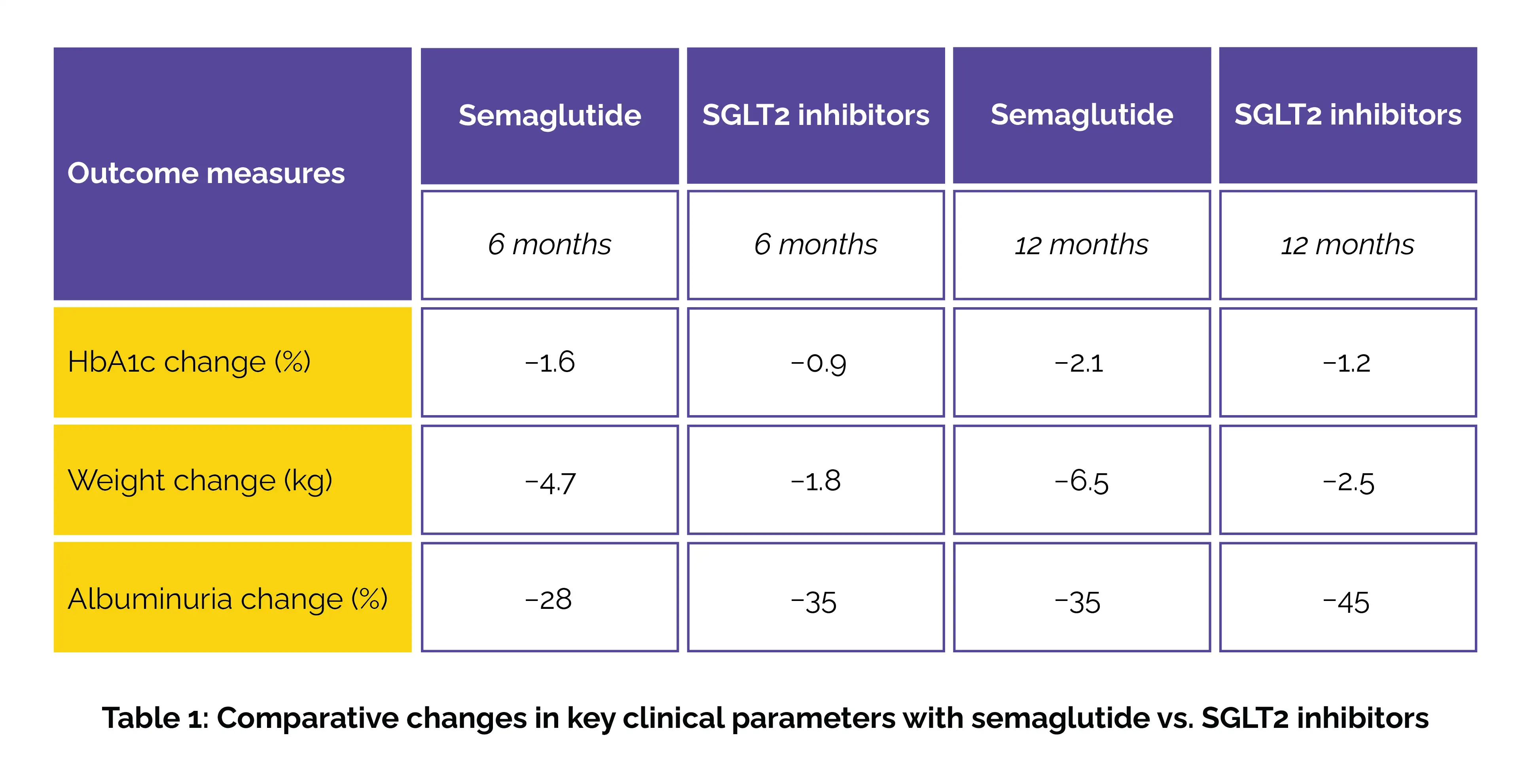
Semaglutide achieves greater HbA1c and weight reduction, while SGLT2 inhibitors provide larger albuminuria declines in early diabetic nephropathy.
In accordance with the findings of a retrospective observational study, both sodium-glucose cotransporter-2 (SGLT2) inhibitors and the glucagon-like peptide-1 (GLP-1) receptor agonist semaglutide can help stabilize kidney function in patients with early diabetic nephropathy, though their benefits appear to differ.
The study followed 10 adults with type 2 diabetes mellitus and early-stage kidney disease for 12 months. Notably, 5 patients received SGLT2 inhibitors—empagliflozin or dapagliflozin—while the other 5 were treated with semaglutide. All the volunteers had similar baseline profiles, including an estimated glomerular filtration rate (eGFR) above 45 mL/min/1.73 m², moderate albuminuria, and background therapy with renin-angiotensin system blockers, metformin, and statins.
By the 6-month mark, both groups illustrated lower albuminuria and stable eGFR. Semaglutide users experienced larger drops in glycated hemoglobin (HbA1c) and body weight, while SGLT2 inhibitor patients experienced greater reductions in albuminuria. At 12 months, these trends persisted—SGLT2 inhibitors were found to substantially reduce albuminuria when compared to semaglutide, while semaglutide maintained its edge in glucose control and weight loss (Table 1).
Both drugs were well-tolerated. Notably, 1 SGLT2 inhibitor recipient developed a mild urinary tract infection, and 2 semaglutide patients experienced nausea, prompting one discontinuation. No serious adverse events occurred. The authors highlight that while both therapies stabilize renal function, the choice should be individualized: SGLT2 inhibitors may be preferable for those with higher albuminuria and cardiovascular risk, whereas semaglutide may be better suited for those with obesity or suboptimal glucose control.
They also pointed to the emerging potential of combination therapy, which could merge the renal benefits of SGLT2 inhibitors with the metabolic advantages of semaglutide. While limited by its small sample size and single-center design, this series provides real-world insight into the nuanced roles of SGLT2 inhibitors and semaglutide in early diabetic kidney disease care.
Cureus
Comparative Effectiveness of SGLT2 Inhibitors and Semaglutide in Diabetic Nephropathy: A Retrospective Observational Study
Jimmy Joseph















Comments (0)