

Categories
Change Password!
Reset Password!



Tooth extraction in patients receiving direct oral anticoagulants (DOACs) presents a recognized clinical challenge owing to the potential risk of post-extraction bleeding.
Continuing DOAC therapy during tooth extraction results in mostly mild, manageable bleeding without increasing postoperative pain or impairing oral healing when appropriate local hemostatic measures are used.
Tooth extraction in patients receiving direct oral anticoagulants (DOACs) presents a recognized clinical challenge owing to the potential risk of post-extraction bleeding. Even routine dental procedures may trigger prolonged hemorrhage in anticoagulated individuals. This study determined postoperative bleeding severity, pain intensity, and oral wound healing outcomes following dental extractions in patients who continued DOAC therapy, compared with non-anticoagulated healthy individuals.
A prospective, single-blind case–control study was carried out involving 211 patients on DOAC therapy (apixaban, dabigatran, edoxaban, and rivaroxaban) and 219 healthy controls not receiving anticoagulants. Post-extraction bleeding was graded on a standardized five-point scale at day 7. Pain intensity was assessed utilizing the visual analog scale (VAS), while oral healing parameters—including suppuration, edema, erythema, and bone exposure—were clinically evaluated. Statistical analysis was performed via Kruskal–Wallis H, Chi-square, and Mann–Whitney U tests, with statistical significance set at p < 0.05.
Most patients experienced minimal postoperative bleeding, irrespective of anticoagulation status. But, higher bleeding grades were more frequently noted in the DOAC cohort, especially among rivaroxaban users (grade 2 bleeding in 6.9% and grade 3 in 13.8%) and edoxaban users (3.6% and 7.3%, respectively). Pain scores were comparable between groups (Table 1).
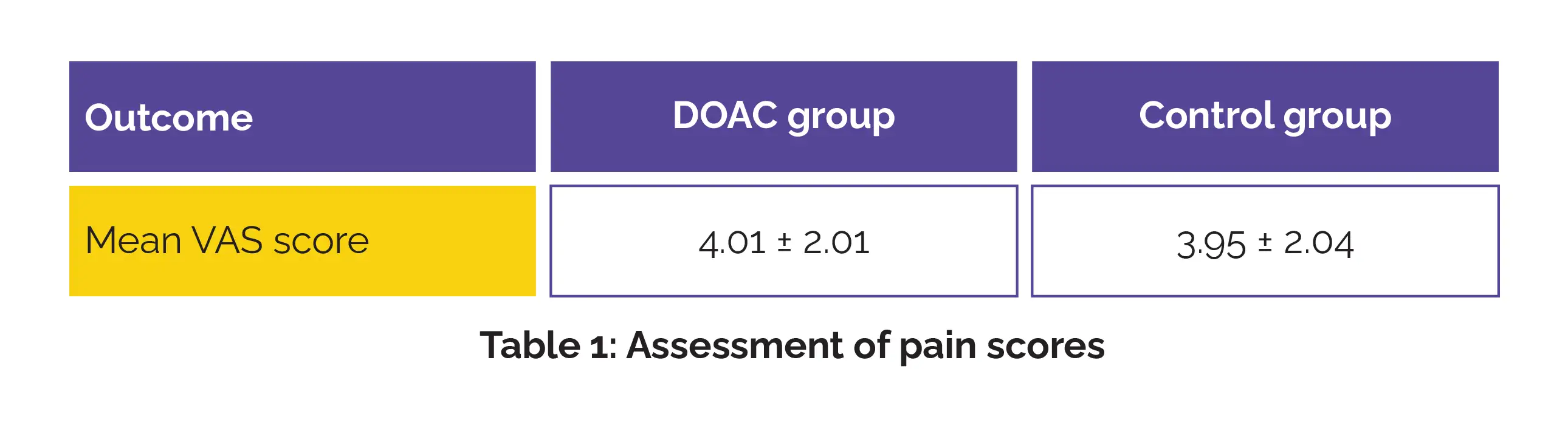
Rates of erythema and edema exhibited no vital difference. Bone exposure occurred more frequently in those on DOAC therapy, while suppuration rates were comparable between groups.
Performing tooth extractions without interrupting DOAC therapy appeared clinically safe when careful surgical technique and effective local hemostatic measures were applied. Although bleeding intensity varied among specific DOAC agents, complications remained predictable and manageable. These findings support a personalized, risk-based perioperative dental care strategy, rather than routine discontinuation of anticoagulant therapy.
BMC Oral Health
Evaluation of postoperative bleeding and pain following tooth extraction in patients using direct oral anticoagulants: a prospective case-control study with blinded evaluation
Ilhan Kaya












Comments (0)