

Categories
Change Password!
Reset Password!


Type 2 diabetes mellitus (T2DM) patients undergoing premixed insulin therapy often struggle to maintain optimal glycemic control.
Adding vildagliptin to premixed insulin therapy boosts glycemic control and remarkably reduces glucose variability in type 2 diabetes mellitus.
Type 2 diabetes mellitus (T2DM) patients undergoing premixed insulin therapy often struggle to maintain optimal glycemic control. This real-world study evaluated the impact of adding vildagliptin to the treatment regimen in such individuals.
Individuals with T2DM who exhibited suboptimal glycemic control while on premixed insulin were included. Volunteers in the intervention group received additional vildagliptin, while the control group underwent insulin dose adjustments without vildagliptin. Both groups were matched for body mass index, age, duration of diabetes, and baseline glycated hemoglobin (HbA1c). Flash glucose monitoring, HbA1c, and glycated albumin were assessed at baseline and again 3 months following treatment modification.
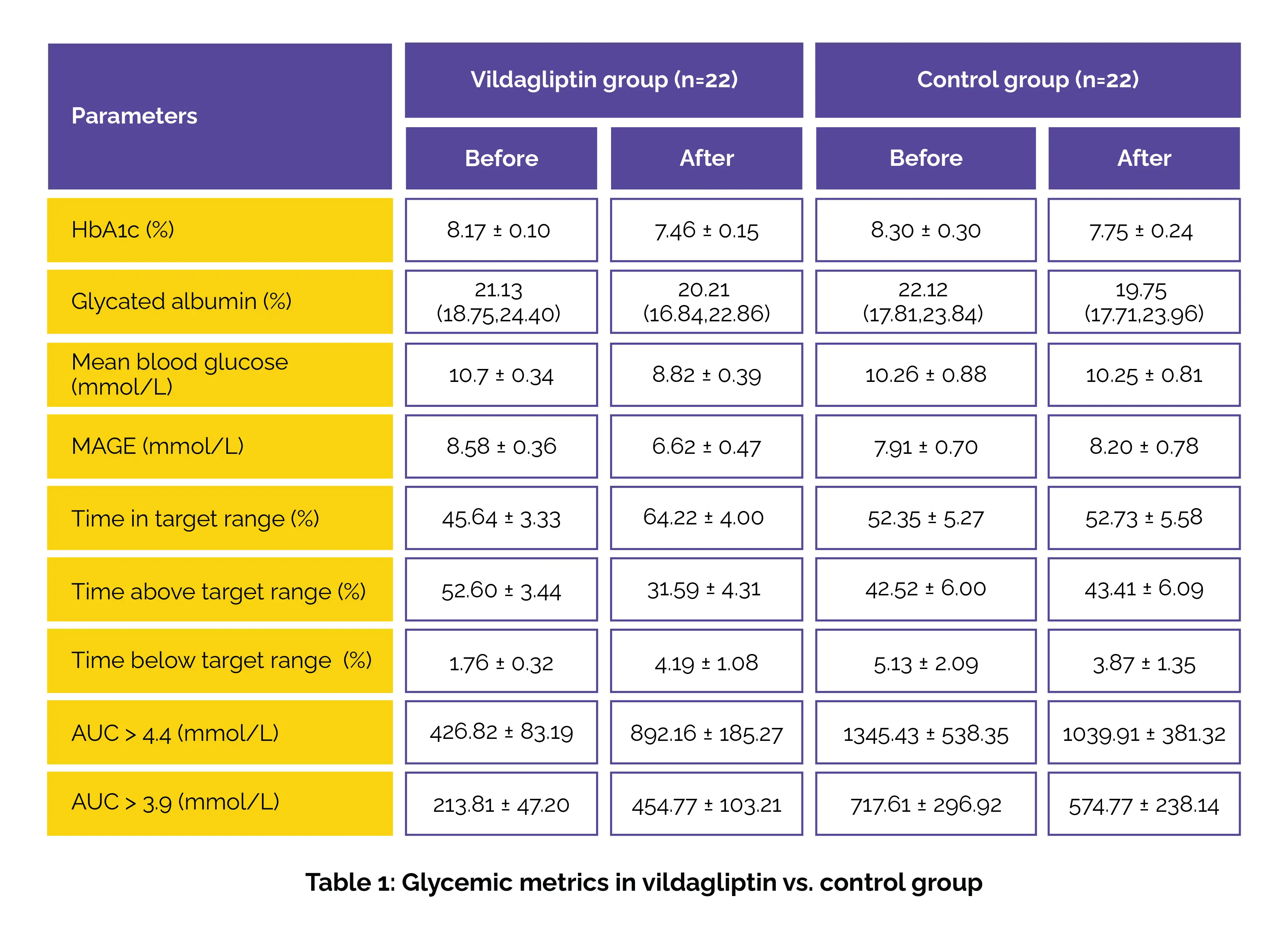
Vildagliptin-treated group showed prominent reductions in HbA1c and glycated albumin. Notably, this group experienced a marked decrease in the mean amplitude of glycemic excursions (MAGE), as well as in mean blood glucose levels, and time above the target range, relative to controls. Improvements were also observed in the time in target range and in the area under the curve (AUC) for glucose concentrations above 4.4 mmol/L and 3.9 mmol/L (Table 1).
Continuous glucose monitoring over a two-week period revealed lower post-dinner glucose levels in the vildagliptin group.
Vildagliptin added to premixed insulin significantly lowered HbA1c, glycated albumin, and mean blood glucose levels, while improving time in range and reducing glycemic variability in patients suffering from T2DM.
Frontiers in Endocrinology
The effects of vildagliptin on glycemic variability in patients with type 2 diabetes on premixed insulin therapy
Deyue Kong et al.














Comments (0)