

Змінити пароль!
Скинути пароль!



Комбінація алісартан ізопроксіл + амлодипін забезпечує чудовий та стійкий контроль артеріального тиску порівняно із застосуванням тільки алісартану при есенціальній артеріальній гіпертензії.
За результатами рандомізованого контрольованого дослідження ІІІ фази фіксована комбінація доз алісартану ізопроксилу (АЛІ) 240 мг та амлодипіну (АМЛ) 5 мг забезпечує кращий контроль артеріального тиску (АТ), ніж монотерапія АЛІ у пацієнтів з легкою та помірною есенціальною гіпертензією.
У дослідженні взяли участь 199 пацієнтів із середнім систолічним АТ у положенні сидячи ( СерСАТ) від 140 до <180 мм рт. ст. та діастолічним АТ (СерДАТ) від 90 до <110 мм рт. ст. Усі пацієнти (вік 18–70 років) спочатку отримували АЛІ протягом 4-тижневого вступного періоду, після чого були рандомізовані у співвідношенні 1:1 для отримання АЛІ/АМЛ (n=99) або лише АЛІ (n=100) один раз на добу протягом 12 тижнів.
За цією фазою слідувало 40-тижневе відкрите дослідження продовження терапії, протягом якого всі пацієнти отримували комбінацію АЛІ/АМЛ, що дозволило провести довгострокову оцінку ефективності та безпеки. Результати показали суттєво більше зниження серСАТ та серДАТ на 12-му тижні в групі АЛІ/АМЛ у порівнянні з групою АЛІ. Амбулаторний моніторинг АТ додатково підтвердив ці результати, показавши більш виражене зниження систолічного/діастолічного АТ за 24 години групи застосування комбінації (таблиця 1).
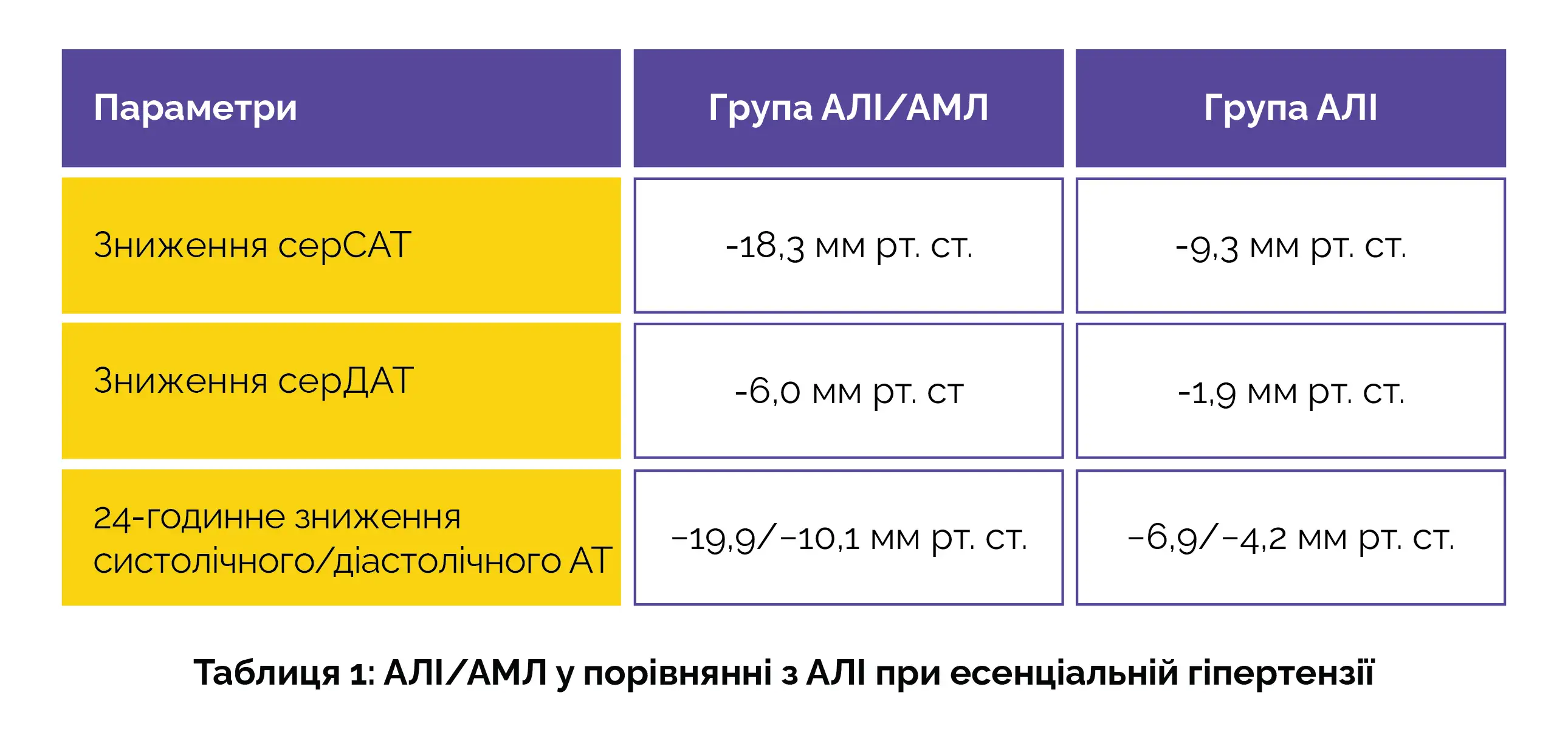
Важливо відзначити, що більша кількість пацієнтів у групі комбінованої терапії досягла цільового офісного АТ (40,2% проти 20,4%) та відповідала критеріям відповіді АТ на лікування (53,6% проти 25,5%). Профіль безпеки комбінації АЛІ/АМЛ був сприятливим, небажані явища були легкими та порівнянними між групами. Жодних нових проблем безпеки за 52-тижневий період не виникло. В цілому дослідження показує, що комбінація фіксованих доз АЛІ/АМЛ при прийомі один раз на добу забезпечує більш ефективний та стійкий контроль АТ, ніж монотерапія, а зручна лікарська форма у вигляді однієї таблетки може підвищити прихильність до лікування та покращити довгострокові результати при есенціальній гіпертензії.
Journal of Human Hypertension
Efficacy and Safety of Allisartan Isoproxil / Amlodipine in Patients with Essential Hypertension : A Phase III, Multicenter , Double-Blind , Parallel-Group , Randomised study
Hongjie Chi та співавт .















Коментарі (0)