

Змінити пароль!
Скинути пароль!


Комбінація гістаглобулін + біластин забезпечує більш швидке, ефективне і добре переносиме полегшення симптомів у пацієнтів з хронічною спонтанною кропив'янкою в порівнянні із застосуванням тільки біластину.
У рандомізованому клінічному дослідженні додавання гістаглобуліну до біластину прискорило полегшення симптомів та покращило загальний контроль захворювання при хронічній спонтанній кропив'янці (ХСК). У дослідженні, проведеному в дерматологічному амбулаторному відділенні високоспеціалізованої лікарні, оцінили ефективність комбінованої терапії ін'єкціями гістаглобуліну з антигістамінним препаратом біластином для полегшення симптомів ХСК. 57 дорослих пацієнтів (старше 18 років), у яких симптоми ХСК зберігалися понад 6 тижнів, були поділені на дві групи:
Були зареєстровані докладні клінічні дані, включаючи демографічні показники пацієнтів, характеристики хронічної кропив'янки та вихідний індекс активності кропив'янки (UAS). Додаткові лабораторні дослідження включали загальний аналіз крові, оцінку функції нирок, печінки та щитоподібної залози, рівні сироваткового імуноглобуліну E (IgE), абсолютну кількість еозинофілів, рівні вітаміну B12 та результати шкірної проби з аутологічною сироваткою.
Значення UAS7 – ключового показника тяжкості кропив'янки – відслідковувалися щотижня протягом 6 тижнів. Первинною кінцевою точкою були зміни UAS, а вторинні кінцеві точки включали контроль симптомів та моніторинг безпеки. Отримані результати були переконливими. До 6-го тижня у групі комбінованої терапії спостерігалося більш виражене зниження UAS порівняно з групою монотерапії (таблиця 1).
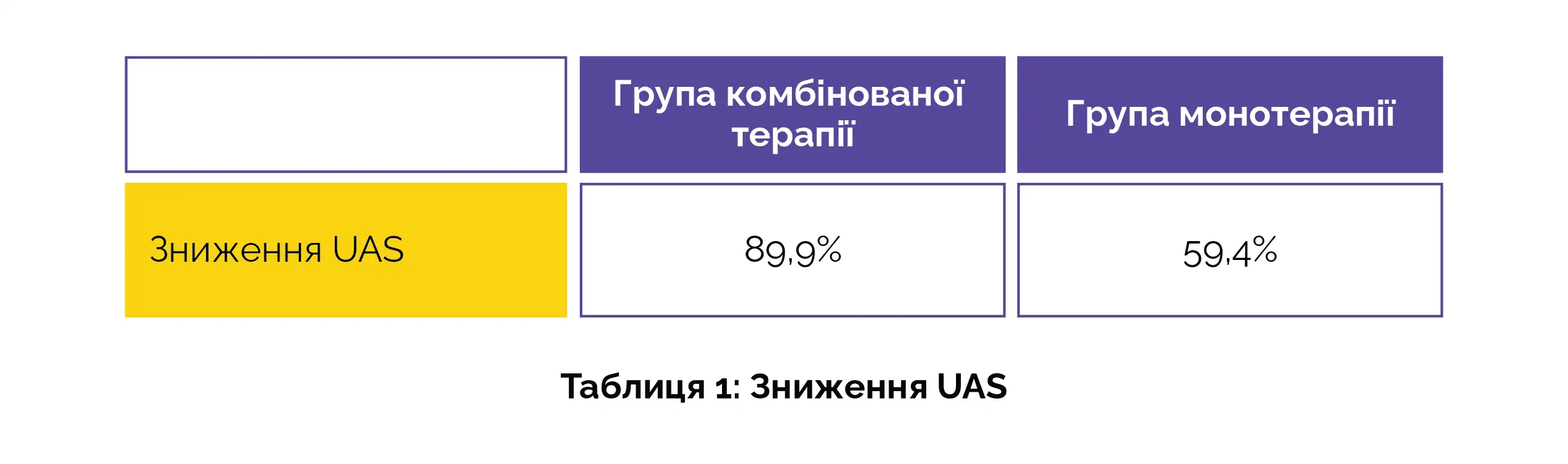
Важливо відзначити, що в групі комбінованого лікування полегшення симптомів почалося вже на 2-му тижні. Лабораторні маркери також покращилися помітніше в групі комбінованої терапії, при цьому спостерігалося помітне зниження як рівня сироваткового IgE, так і кількості еозинофілів - ключових показників алергічного запалення. Важливо відзначити, що в ході дослідження не було зафіксовано будь-яких небажаних явищ, що свідчить про чудовий профіль безпеки комбінації. Ці результати свідчать про те, що додавання гістаглобуліну до стандартної антигістамінної терапії може значно покращити контроль симптомів у пацієнтів з ХСК, забезпечуючи швидке та ефективне полегшення.
Archives of Dermatological Research
Effect of combining histaglobulin with antihistamines in patients with chronic spontaneous urticaria in a tertiary care hospital setting - a randomized trial
Kalpana Mali Ramanna та співавт.











Коментарі (0)