

Змінити пароль!
Скинути пароль!



У пацієнтів з ерозивною гастроезофагеальною рефлюксною хворобою (ГЕРХ) тегопразан не поступався за ефективністю езомепразолу, забезпечуючи 99,1% загоєння за 8 тижнів.
У клінічному дослідженні фази 3 у пацієнтів з ерозивною гастроезофагеальною рефлюксною хворобою (ГЕРХ) тегопразан, калій-конкурентний блокатор секреції соляної кислоти наступного покоління (ККБСК), забезпечив швидке та тривале пригнічення кислотності, а за показниками загоєння слизової він був порівняний з езомепразолом.
Це рандомізоване контрольоване дослідження проводилося у трьох країнах, зокрема в Індії та в Південній Африці. Загалом після 14-денного скринінгу було зареєстровано 255 пацієнтів (віком від 18 до 65 років) з ендоскопічно підтвердженим ерозивним ГЕРХ ступеня A до D згідно з класифікацією Лос-Анджелеса. Учасників рандомізували у співвідношенні 1:1, у групи прийому 50 мг тегопразану або 40 мг езомепразолу, один раз на день протягом 8 тижнів. Після 8 тижнів сукупна ендоскопічна швидкість загоєння була трохи вищою в групі тегопразану порівняно з групою езомепразолу (Таблиця 1):
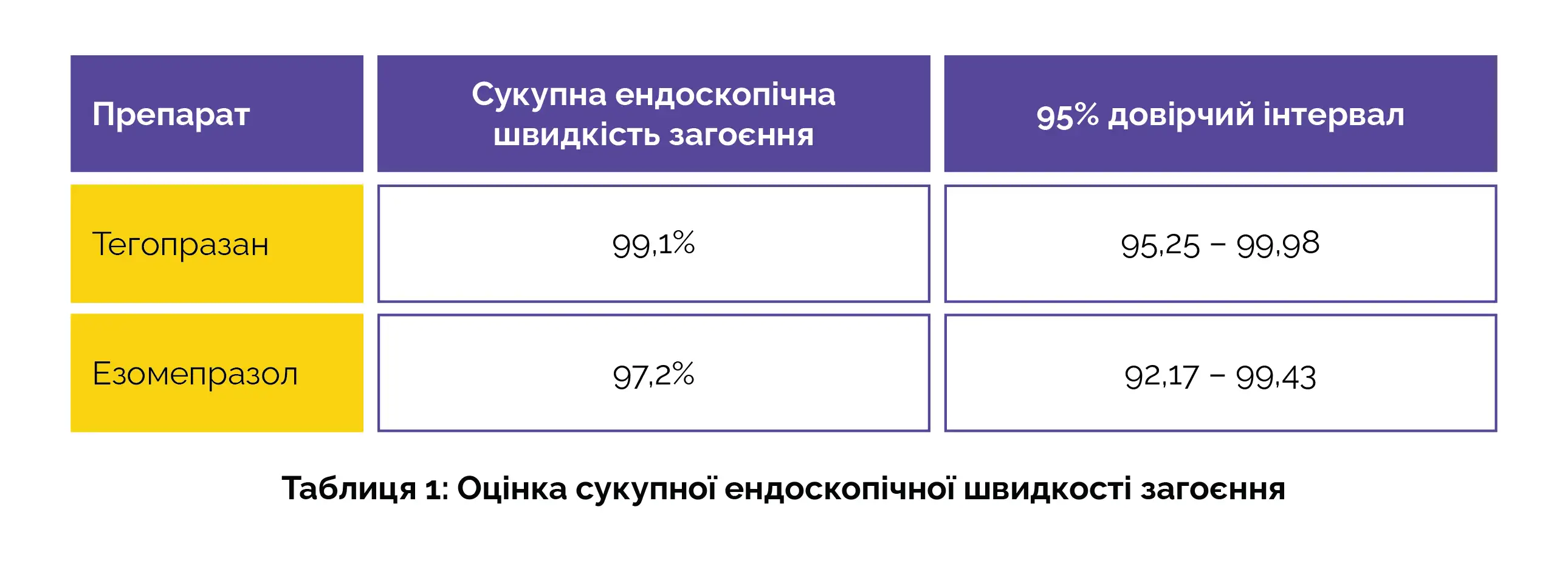
Ці результати підтвердили з високою статистичною значущістю (p < 0,0001), що тегопразан не поступається за ефективністю езомепразолу. Швидкий початок ефекту тегопразану, який полягає у досягненні та підтримці внутрішньошлункового pH вище 4 після одноразового та повторного прийому, забезпечує раннє полегшення симптомів і тривале загоєння слизової оболонки. Тегопразан добре переносився, а його профіль безпеки був порівнянний із езомепразолом. В обох групах частота побічних явищ, що виникли під час лікування (ПЯЛ), була схожою.
Найпоширенішими ПЯЛ (≥1% пацієнтів) були біль у животі, головний біль, діарея та нудота. Дослідження не виявило непередбачених сигналів в області безпеки, що підтвердило придатність тегопразану для тривалого клінічного застосування. Результати дослідження засвідчили, що тегопразан є безпечним, ефективним і добре переносимим варіантом лікування ерозивної ГЕРХ, що забезпечує швидкість загоєння, порівнянну з езомепразолом, і приносить додаткову користь, швидко знижуючи кислотність.
Japanese Journal of Gastroenterology
Efficacy and Safety of Tegoprazan in Patients with Erosive Gastroesophageal Reflux Disease- A Multicountry, Prospective, Randomized, Double-Blind, Active-Controlled, Parallel-Group Study
Piyush Agarwal та ін.











Коментарі (0)