

Змінити пароль!
Скинути пароль!



Затримка мокротиння – одна з основних причин уповільненого одужання дітей із пневмонією.
Застосування вібраційної терапії для відходження мокротиння значно прискорює клінічне одужання, сприяє швидшому зникненню симптомів, покращує функцію легень і показники газового складу крові, а також знижує рівень запалення у дітей.
Затримка мокротиння – одна з основних причин уповільненого одужання дітей із пневмонією. У цьому рандомізованому контрольованому дослідженні вивчалася додаткова цінність вібраційної терапії для відходження мокротиння (MVSC) під час її використання разом із стандартною медикаментозною терапією. Крім того, було побудовано номограму для персоналізованого підбору параметрів лікування.
Загалом 160 дітей із пневмонією було рандомізовано у дві рівні групи: одна група отримувала стандартну медикаментозну терапію, інша отримувала додатково MVSC. До та після лікування оцінювали наступні параметри: клінічне покращення (класифіковане як «помітне покращення» або «покращення»), час усунення симптомів, функцію легень, показники газового складу крові та маркери запалення. Для визначення ключових предикторов відповіді лікування використовували регресію LASSO.
У групі MVSC частота клінічного поліпшення була помітно вищою порівняно з контрольною групою (таблиця 1).
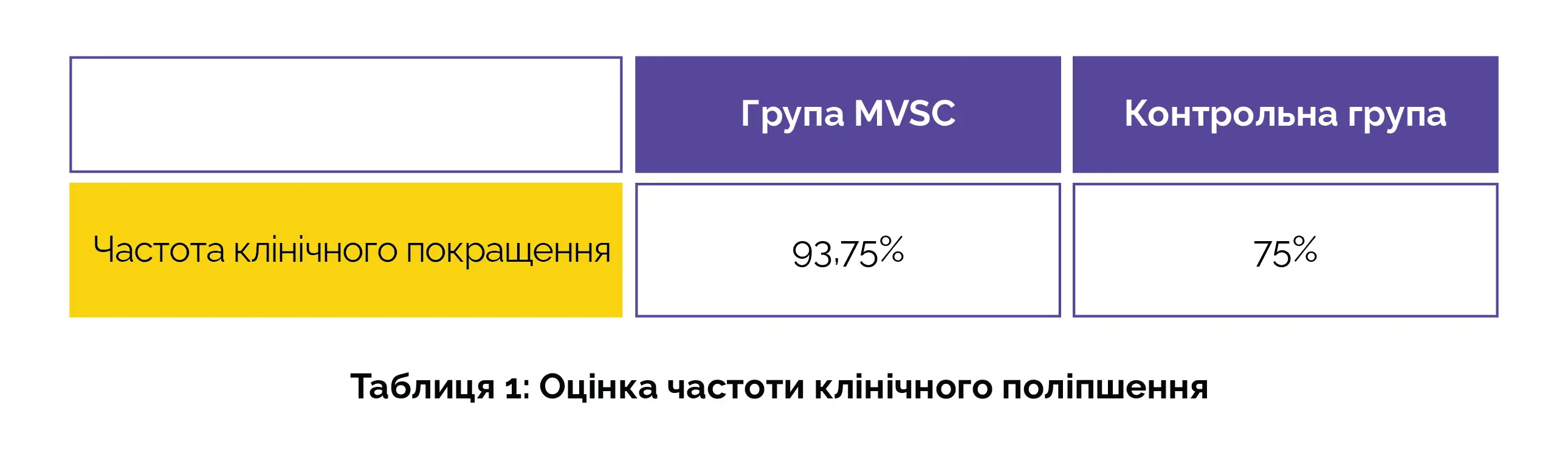
Крім того, у цій групі спостерігалося швидше зникнення симптомів (кашель, лихоманка, вологі хрипи) та більш коротке перебування у стаціонарі. Також спостерігалося помітне поліпшення показників функції легень (обсяг форсованого видиху за першу секунду [ОФВ 1 ], відношення обсягу форсованого видиху за першу секунду та форсованої життєвої ємності легень [ОФВ 1 /ФЖЄЛ] ), показників газового складу крові (парціарний тиск вуглекислого газу в артеріальній крові [PaCO2 ], рН) та зниження запальних біомаркерів (С-реактивний білок [СРБ], прокальцитонін). Для індивідуалізації вібраційної терапії була розроблена номограма, що включає вік, окружність грудної клітки, наявність вологих хрипів, тяжкість захворювання, частоту та тиск вібрації. Для цього інструменту продемонстровано високу прогностичну ефективність з AUC 0,943.
Включення MVSC до стандартних схем лікування значно покращило клінічні результати у дітей з пневмонією. Розроблена номограма дозволяє індивідуально підбирати параметри даного методу лікування для підвищення терапевтичної ефективності.
Frontiers in Pediatrics
Effectiveness of mechanical vibration-assisted sputum clearance in pediatric pneumonia: a randomized controlled trial with development of an intelligent parameter optimization model
Sujing Xue та співавт.












Коментарі (0)