

Categories
Change Password!
Reset Password!



This retrospective study determined how implementing total dose infusion iron, specifically ferric derisomaltose (FD), affects obstetric infusion clinic efficiency and patient access.
Introducing ferric derisomaltose increases obstetric infusion clinic capacity, shortens total infusion time, reduces the number of visits, and improves treatment completion for pregnant patients.
This retrospective study determined how implementing total dose infusion iron, specifically ferric derisomaltose (FD), affects obstetric infusion clinic efficiency and patient access.
Pregnant women (aged 18 years or older) who received intravenous (IV) iron between June 2021 and February 2024 were enrolled. The primary outcome was the monthly number of unique outpatients receiving IV iron (either iron sucrose [IS] or FD) in the obstetric infusion clinic during 3 time periods: baseline (Period 1: June 2021–May 2022), initial FD availability (Period 2: June 2022–July 2023), and after policy adoption of FD for pregnancy (Period 3: August 2023–February 2024). IS and FD were examined for occurrence of adverse reactions, cumulative infusion time per pregnancy, mean clinic visits per pregnancy, and course completion rates. Descriptive statistics were used, with a significance threshold of P < 0.05.
Among 514 patients, 327 received IS and 187 received FD. Following the FD introduction, the mean number of patients treated per month escalated from 20.1 ± 4.5 in Period 1 to 20.9 ± 4.4 in Period 2, and to 30.7 ± 6.3 in Period 3. Compared with IS, FD was linked with substantially shorter total infusion times, fewer clinic visits per pregnancy, and higher treatment completion rates, without an increase in adverse reactions (Table 1).
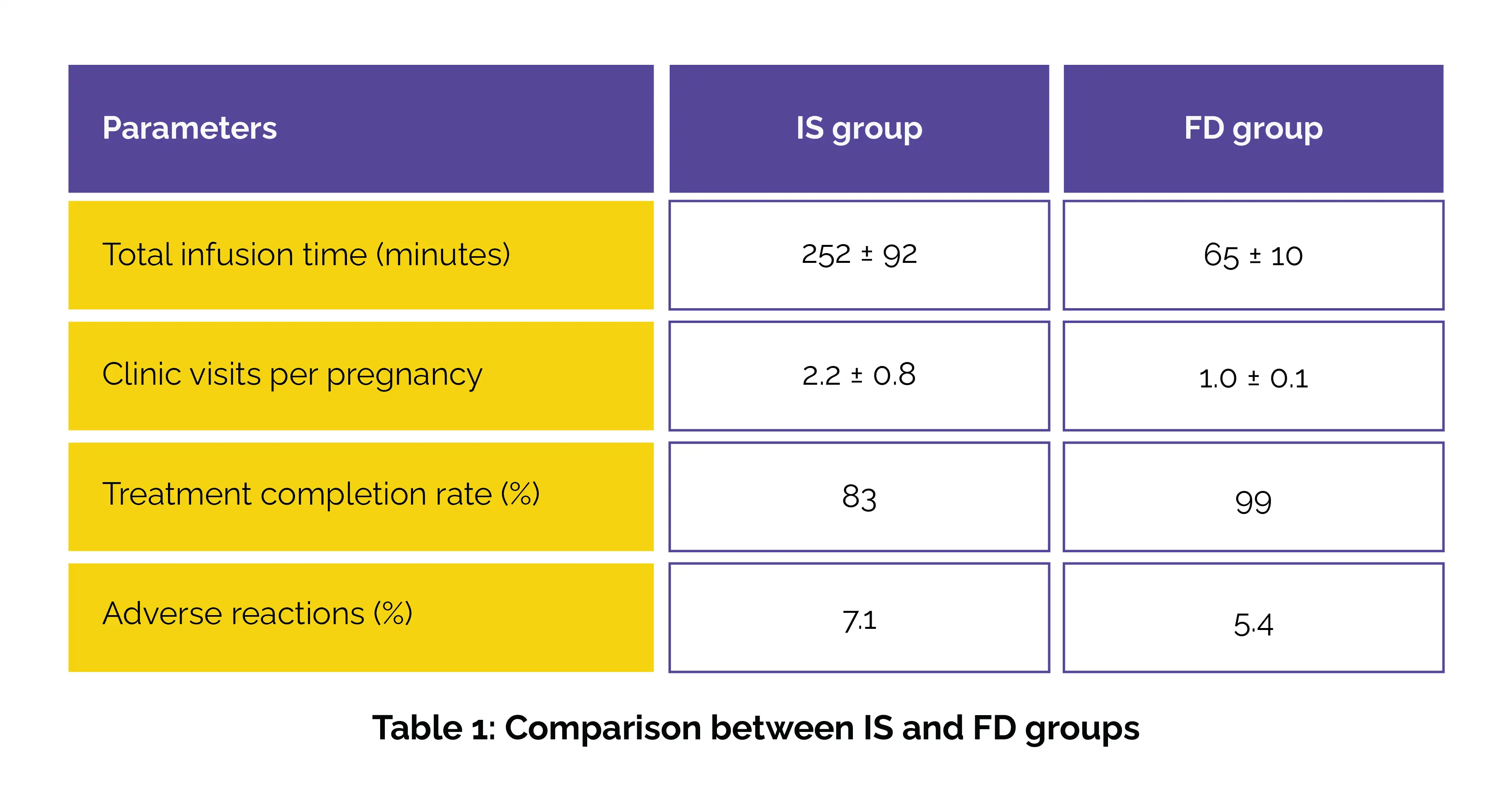
Adoption of total dose infusion iron improved clinic capacity, enhanced patient access, and streamlined care by reducing infusion times and clinic visits, highlighting its efficiency and patient-centered benefits.
Journal of Obstetrics and Gynaecology Canada
Ferric Derisomaltose Versus Iron Sucrose in Pregnancy (FLIP): A Retrospective Observational Study on Outpatient Intravenous Iron Infusion Capacity
Mary Morgan et al.















Comments (0)