

Categories
Change Password!
Reset Password!



This study investigated how children’s screen time and compliance with screen use guidelines relate to behavioral and emotional difficulties, while exploring the mediating influence of sleep duration.
Higher screen time is linked to greater emotional and behavioral difficulties in children, while adequate sleep and adherence to screen time limits are associated with better psychosocial outcomes.
This study investigated how children’s screen time and compliance with screen use guidelines relate to behavioral and emotional difficulties, while exploring the mediating influence of sleep duration.
A cross-sectional analysis was performed using data from the multicenter, prospective Childhood Obesity Risk Assessment Longitudinal Study (CORALS), which comprised 1,420 children aged 3–6 years. Daily screen time (hours per day) and compliance with the ≤2 hours/day guideline were examined. Behavioral and emotional difficulties were assessed via the Strengths and Difficulties Questionnaire (SDQ).
Multivariable linear and logistic regression analyses were applied to examine the link between screen time (as both continuous and categorical variables) and SDQ scores, adjusting for relevant confounding factors. Additionally, the moderating role of sleep was examined, and isotemporal substitution analyses were executed to explore the impact of replacing screen time with sleep duration.
Higher screen time was linked to greater behavioral and emotional difficulties, including more emotional symptoms and conduct problems. In contrast, children who followed screen time recommendations showed fewer behavioral and emotional difficulties overall (Table 1).
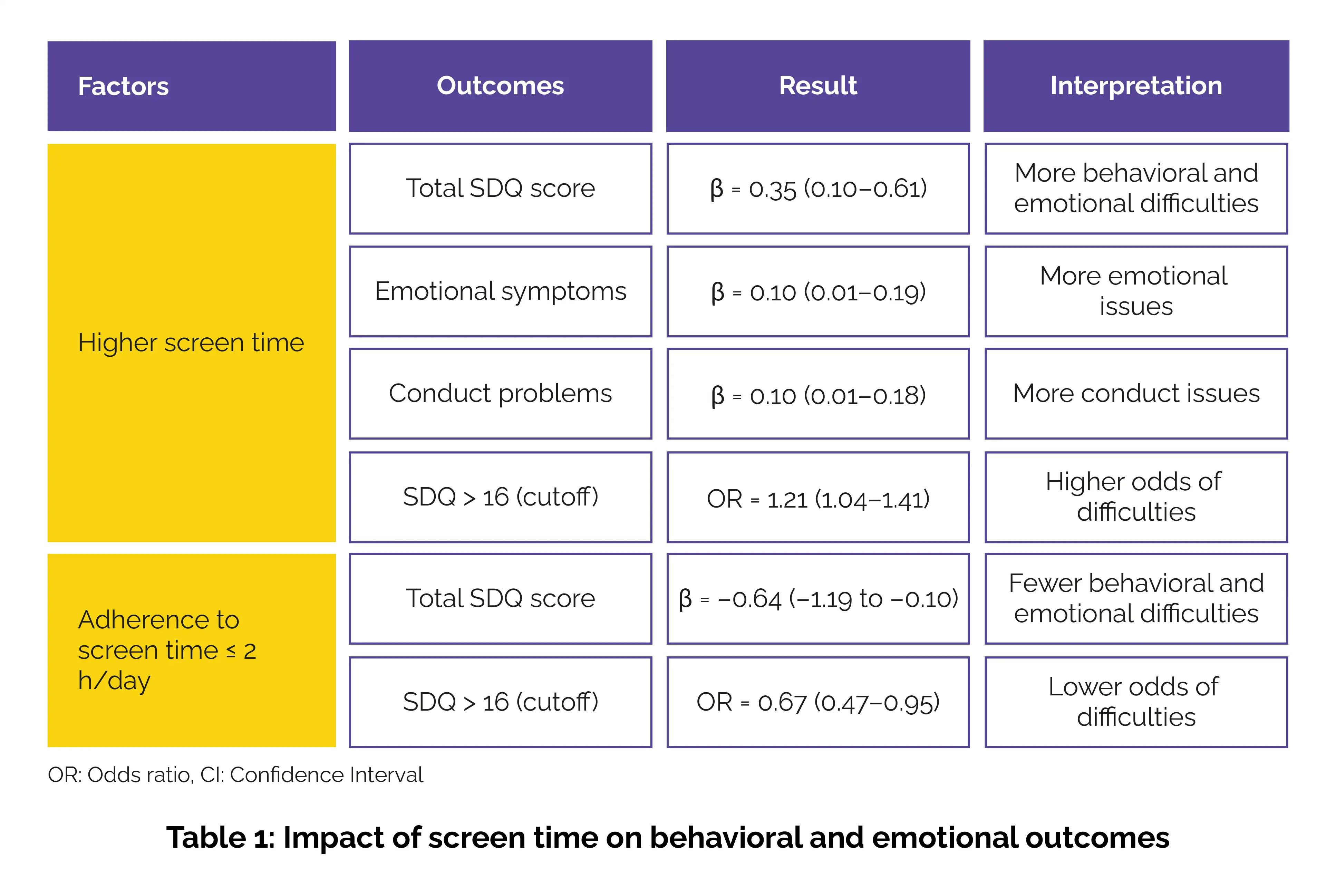
Sleep duration moderated the association between screen time and behavioral difficulties (P = 0.020). Substituting screen time with sleep was linked to better behavioral outcomes across all domains except prosocial behavior.
Children with higher screen time exhibited increased emotional and behavioral challenges, while those following screen time limits and maintaining adequate sleep showed lower difficulties, underscoring the importance of balanced digital exposure and healthy sleep routines.
World Journal of Pediatrics
Sleep duration moderates association between screen time and emotional and behavioural problems in young children
Lucía Iglesias-Vázquez et al.















Comments (0)