

Змінити пароль!
Скинути пароль!



Перинатальна депресія вражає близько 10–20% вагітних жінок, та становить ризик як для матері, так і для розвитку плода.
Харчова підтримка за допомогою пробіотиків, міо-інозитолу та мікроелементів до зачаття є перспективною стратегією мінімізації ускладнень вагітності, покращення якості життя матері та оптимізації параметрів росту плода.
Перинатальна депресія вражає близько 10–20% вагітних жінок, та становить ризик як для матері, так і для розвитку плода. Через сумніви щодо безпеки використання антидепресантів під час вагітності вчені шукають альтернативні варіанти. Це ретроспективне когортне дослідження вивчило вплив прийому харчових добавок до вагітності на настрій матері, якість життя та результати для плода у матерів із депресією.
Дослідники відібрали 314 вагітних жінок, які страждали на легку та помірну депресію (бал за шкалою депресії Цзунга був менше 69 балів) і поділили їх на 2 групи:
Втручання почалося за 3 місяці до зачаття і тривало протягом усієї вагітності. Психічне здоров'я та якість життя матері оцінювали до зачаття та після пологів за допомогою опитувальника стану та властивостей тривожності (State-Trait Anxiety Inventory), Шкали позитивного та негативного афекту (Positive and Negative Affect Schedule-Now), Опитувальника здоров'я пацієнта 8 (Patient Health Questionnaire-8) та короткої версії опитувальника якості життя Всесвітньої організації охорони здоров'я (World Health Organization Quality of Life–Brief Version). Параметри росту плода оцінювали за допомогою ультразвуку. Показники стану новонароджених реєстрували.
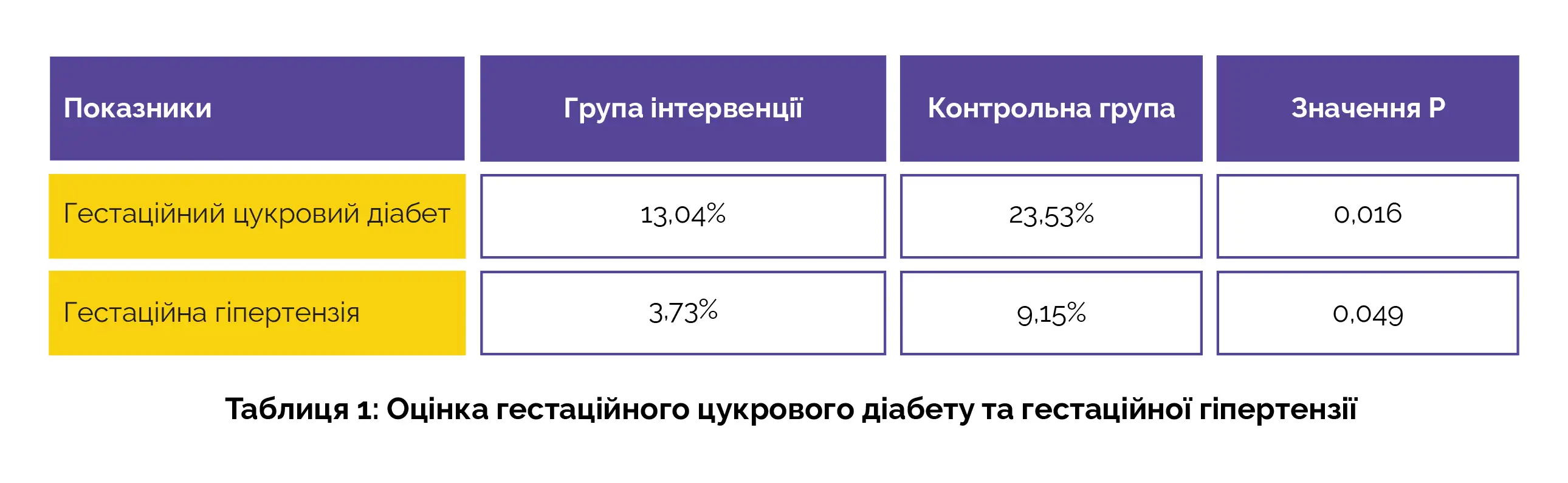
Порівняно з контрольною групою, група інтервенції мала нижчу частоту гестаційного цукрового діабету та гестаційної гіпертензії (Таблиця 1).
На пізньому етапі вагітності жінки, які приймали дієтичні добавки, мали підвищений рівень цинку, інозитолу, заліза в крові та пробіотиків у фекаліях. Післяпологові оцінки показали зниження тривожності та симптомів депресії, а також значне покращення позитивного афекту (P = 0,002), тривожності (P = 0,002) та тяжкості депресії (PHQ-8, P = 0,018). Показники якості життя значно покращилися у психологічній сфері (P = 0,041) та в домені оточуючого середовища (P = 0,009). Крім того, плоди у групі інтервенції мали більші біпарієтальний розмір та довжину стегнової кістки, а новонароджені мали довшу довжину тіла та нижчий рівень госпіталізації до відділення інтенсивної терапії новонароджених (2,48% проти 7,84%).
Прийом міо-інозитолу, пробіотиків і мікроелементів до зачаття та під час вагітності знижує ризик ускладнень вагітності, підтримує психічне здоров'я матері, покращує якість життя та сприяє кращому росту плоду та стану новонародженого.
World Journal of Psychiatry
Effects of combined preconception and prenatal myo-inositol, probiotics, and trace element supplementation on the outcomes of depressed mothers
Shu-Fang Qi та ін.









Коментарі (0)