

Categories
Change Password!
Reset Password!



Subtle alterations in rest-activity patterns during adolescence and young adulthood highlight early warning signs of depression, offering potential for timely detection and preventive strategies.
Pre-wake fractal motor activity is elevated in unmedicated women at major depressive disorder onset, reflecting disrupted rest-activity patterns and providing a potential biomarker linked to symptom severity and circadian regulation.
Subtle alterations in rest-activity patterns during adolescence and young adulthood highlight early warning signs of depression, offering potential for timely detection and preventive strategies. This exploratory study investigated whether women at the onset of unmedicated major depressive disorder (MDD) exhibit distinct rest-activity patterns compared with age-matched healthy controls.
Overall, 15 women with newly diagnosed, unmedicated MDD (ages 19–32 years) and 9 healthy controls (ages 20–31 years) wore wrist activity monitors for about a week. They then completed a controlled lab session to measure natural melatonin levels. Researchers analyzed overall activity and fractal activity correlation (FAC) patterns in eight 3-hour segments across 24 hours and looked for links to depression severity and melatonin levels.
Women with newly diagnosed MDD showed more wake-like activity patterns during the final hours of sleep compared to healthy individuals. This difference was not influenced by overall activity levels or sleep duration but appeared linked to the severity of depressive symptoms. Additionally, there was an observed trend suggesting a relationship between altered sleep activity patterns and melatonin levels in those with MDD (Table 1).
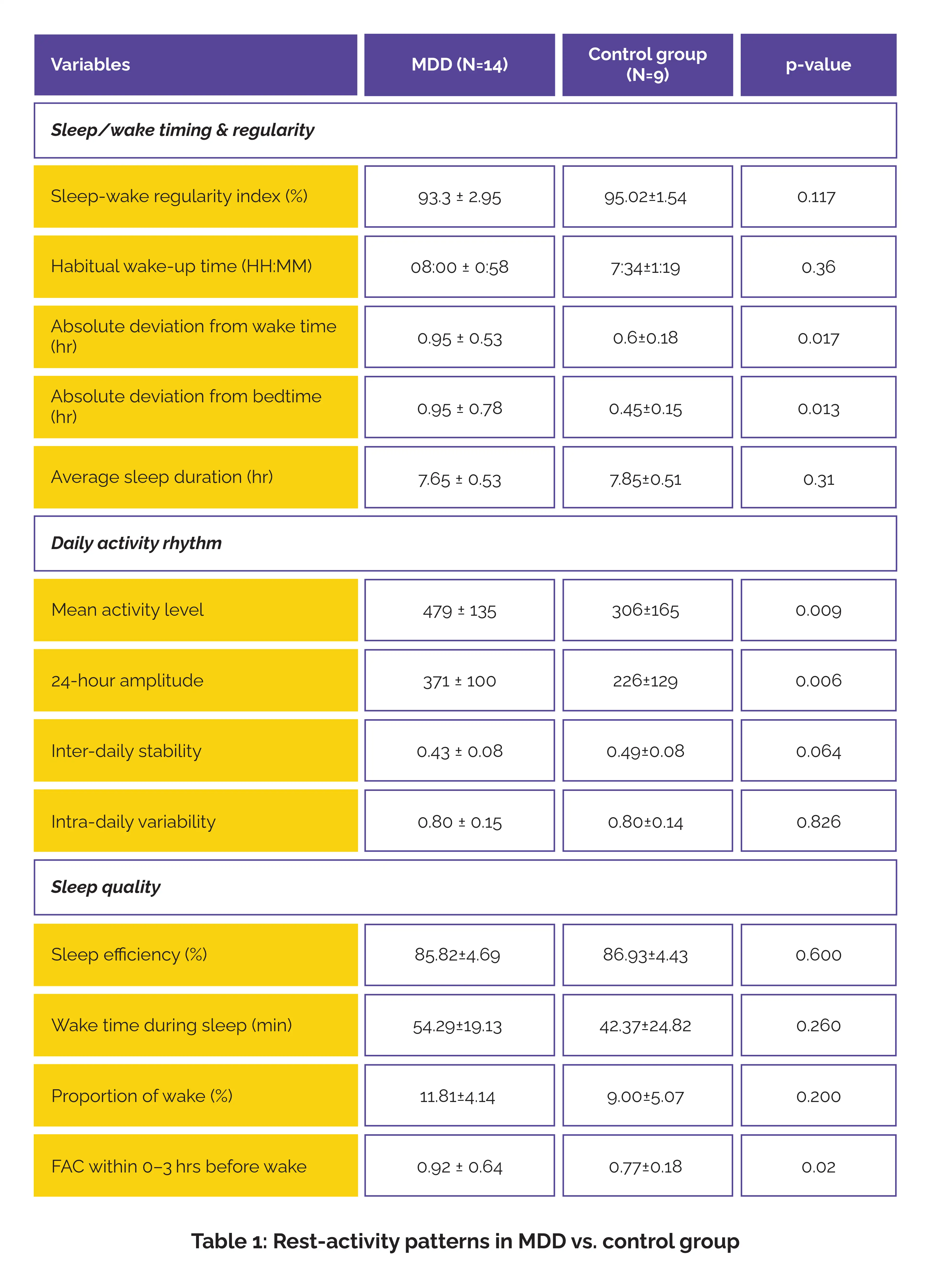
Hui-Wen Yang and his group of researchers concluded that women at MDD onset exhibited pronounced pre-wake fractal activity, revealing silent shifts in their rest-activity rhythms and highlighting a promising behavioral marker for early detection.
BMJ Mental Health
Fractal biomarker of daily activity for women with early onset depression
Hui-Wen Yang et al.













Comments (0)