EN | UA
EN | UA

Help Support

Back

Role of C-reactive protein in fatty liver disease

Nonalcoholic fatty liver disease Nonalcoholic fatty liver disease

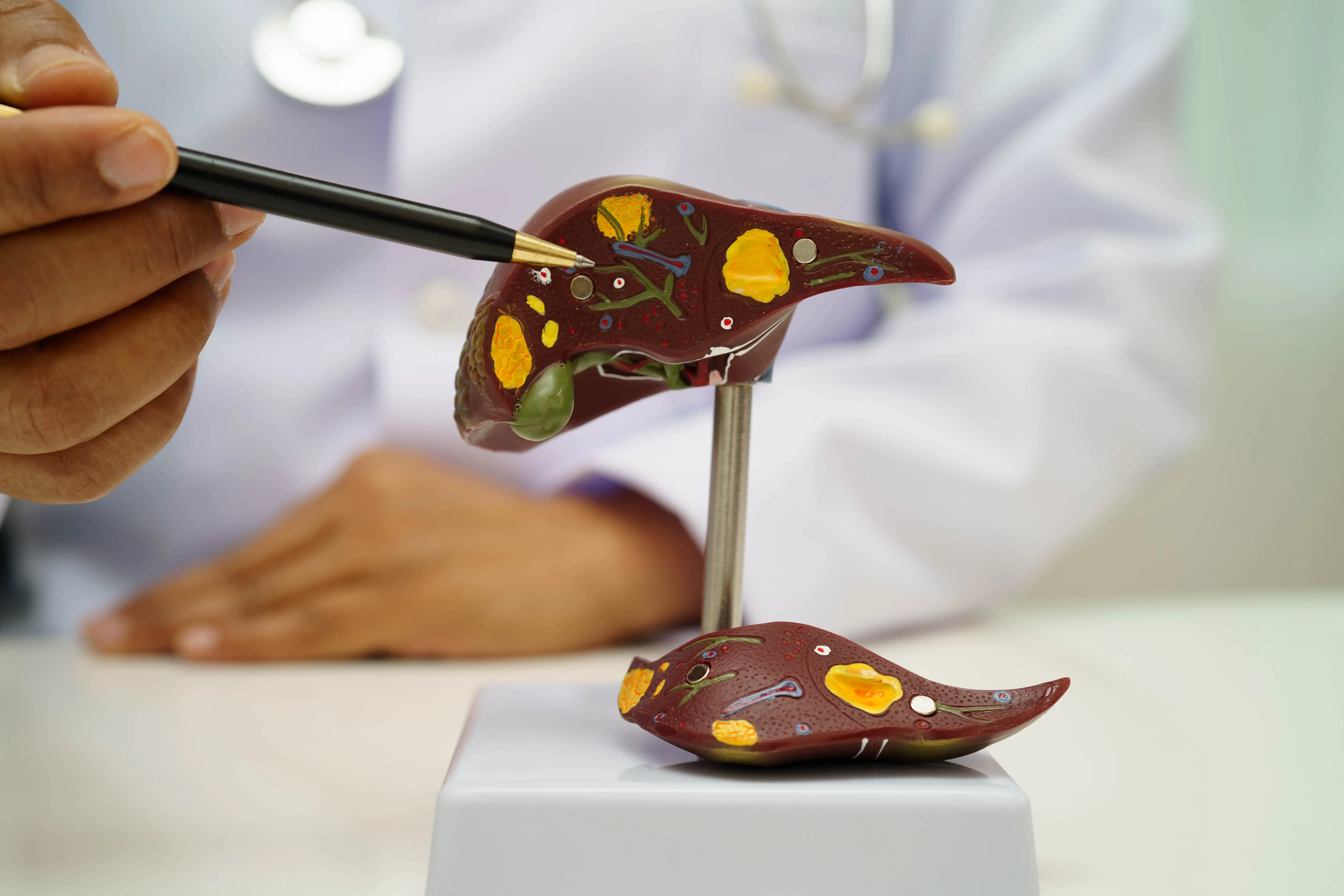
Nonalcoholic fatty liver disease (NAFLD) is steadily recognized as a common metabolic disorder linked to systemic inflammation, with C-reactive protein (CRP) serving as a key biomarker of inflammatory activity.

See All

Key take away

Rising C-reactive protein levels causally increase NAFLD risk, revealing inflammation as a key modifiable factor in preventing disease progression.

Background

Nonalcoholic fatty liver disease (NAFLD) is steadily recognized as a common metabolic disorder linked to systemic inflammation, with C-reactive protein (CRP) serving as a key biomarker of inflammatory activity. Qinghao Guo and his group investigated the causal relationship between CRP levels and NAFLD risk, exploring whether elevated CRP actively contributes to disease development.

Method

A retrospective study included 116 NAFLD patients and 86 controls at Tongji Hospital. NAFLD was diagnosed via ultrasound or liver biopsy, excluding participants with alcohol use, secondary liver disease, infections, malignancies, autoimmune disorders, or incomplete data.

Bidirectional Mendelian randomization (MR) was accomplished utilizing genome-wide association study (GWAS) data from the UK Biobank for CRP and FinnGen for NAFLD. Observational associations were estimated via logistic regression, while causal inference relied on the inverse-variance weighted (IVW) MR method, complemented by sensitivity analyses to ensure robustness.

Result

  • CRP levels were boosted in NAFLD patients
    Individuals diagnosed with NAFLD exhibited higher serum CRP levels compared to controls (2.40 vs. 0.70 mg/L, p < 0.001), highlighting a strong association between systemic inflammation and liver fat accumulation.
     
  • CRP acted as an independent risk factor for NAFLD
    Multivariable regression analysis showed that CRP levels independently predicted NAFLD (odds ratio [OR] = 1.141, 95% confidence interval [CI] 1.007–1.294, p = 0.039), even after adjusting for age, sex, body mass index, and other metabolic parameters, emphasizing its role in disease susceptibility.
     
  • Causal relationship was confirmed via MR
    Augmented CRP directly raised NAFLD risk (IVW: OR = 1.187, 95% CI 1.004–1.404, p = 0.045). These findings were further supported by weighted mode (OR = 1.321) and weighted median (OR = 1.341) analyses, reinforcing that systemic inflammation contributed causally to NAFLD development.
     
  • No reverse causality was detected 
    Bidirectional MR analysis indicated that NAFLD did not causally escalate the CRP levels, suggesting that inflammation drove liver fat accumulation rather than being a consequence.
     
  • Overall, the findings were robust and reliable 
    Sensitivity analyses, including assessments for pleiotropy and heterogeneity, confirmed the stability and validity of the results, demonstrating that the causal link between CRP and NAFLD was consistent and trustworthy.

Conclusion

Higher CRP levels were associated with an amplified risk of NAFLD, depicting the central role of systemic inflammation in disease progression. CRP independently promoted liver fat accumulation, highlighting inflammation as a promising focus for prevention and management.

Source:

Oncology and Translational Medicine

Article:

Causal relationship between C-reactive protein and nonalcoholic fatty liver disease: a retrospective study and bidirectional Mendelian randomization analysis

Authors:

Qinghao Guo et al.

Comments (0)

You want to delete this comment? Please mention comment Invalid Text Content Text Content cannot me more than 1000 Something Went Wrong Cancel Confirm Confirm Delete Hide Replies View Replies View Replies en ru
Try: