

Змінити пароль!
Скинути пароль!



Метою цього рандомізованого контрольованого дослідження є визначення безпеки та ефективності електронних систем доставки нікотину (електронних сигарет) для відмови від куріння.
Електронні сигарети у поєднанні з консультуванням підвищують рівень відмови від куріння порівняно з консультуванням.
Метою цього рандомізованого контрольованого дослідження є визначення безпеки та ефективності електронних систем доставки нікотину (електронних сигарет) для відмови від куріння.
Дорослих, які викурювали щонайменше 5 сигарет на день і які були готові призначити дату відмови, були рандомізовані до інтервенційної або до контрольної групи. Група інтервенції отримала безкоштовні електронні сигарети з рідиною, стандартне консультування щодо відмови від куріння і, за бажанням, нікотинову замісну терапію (за рахунок учасника).
Контрольна група отримала консультації та ваучер, який можна було використати на будь-які цілі, зокрема на нікотинову замісну терапію. Основним результатом було стійке, біохімічно підтверджене припинення куріння через 6 місяців. Вторинні кінцеві точки включали самоповідомлення про відмову від тютюнопаління та всіх продуктів, що містять нікотин, респіраторні симптоми та серйозні побічні події.
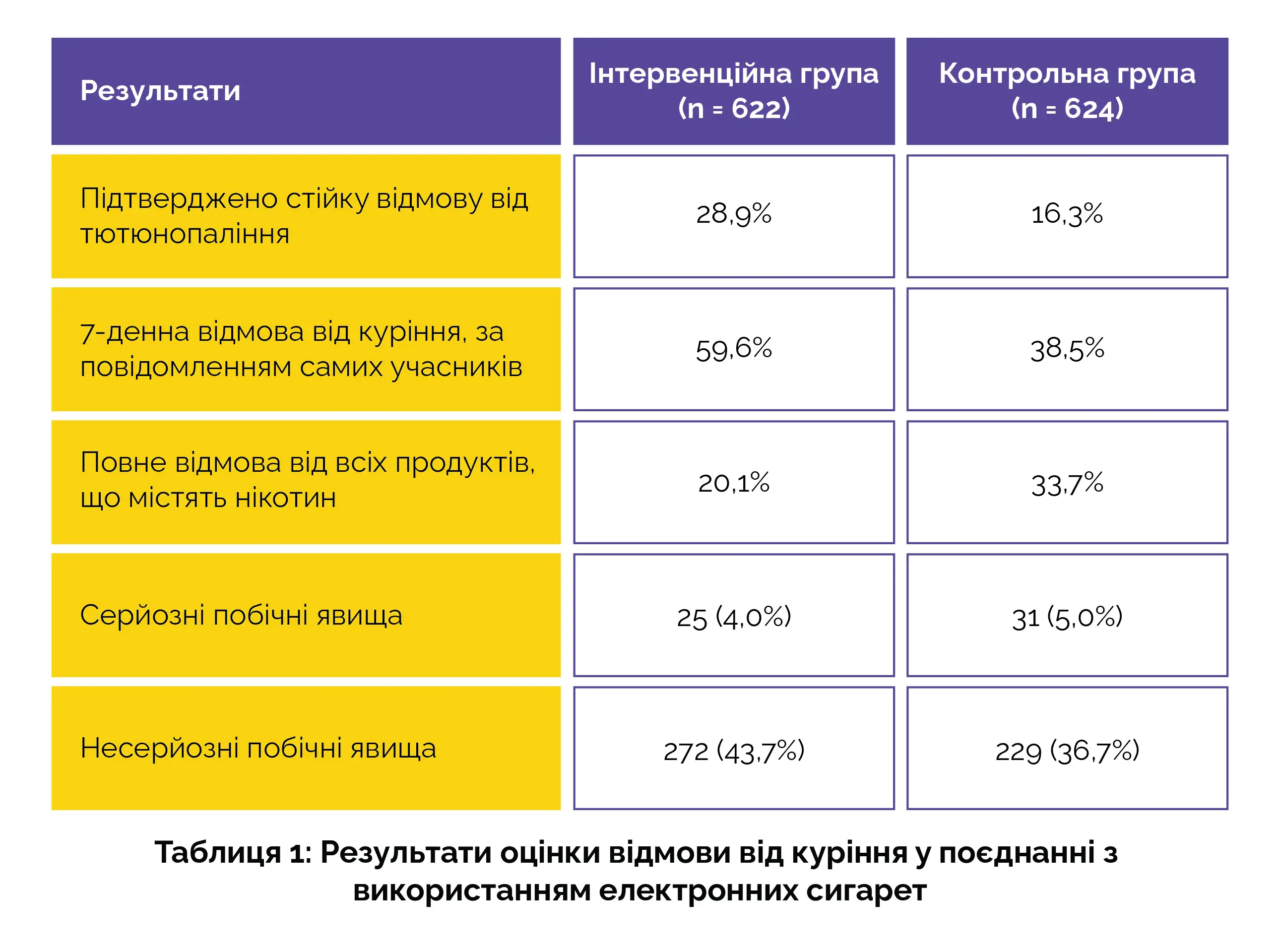
У дослідженні взяли участь 1246 учасників (622 – в інтервенційній групі, 624 - у контрольній групі). Через 6 місяців у групі інтервенції спостерігали вищий рівень підтвердженого стійкого припинення куріння порівняно з контрольною групою (відносний ризик — 1,77). Рівень 7-денного відмови від куріння, про який повідомляли самі учасники після 6 місяців, був вищим у групі втручання, але рівень повної відміни від всіх нікотинвмісних продуктів був нижчим.
Водночас серйозні побічні явища траплялися рідше в групі втручання, а несерйозні були частішими порівняно з контрольною групою (див. Таблицю 1):
Електронні сигарети у поєднанні зі стандартним консультуванням були ефективнішими у сприянні відмові від куріння, ніж лише консультування, і не спостерігалося зростання частоти серйозних побічних явищ.
The New England Journal of Medicine
Electronic Nicotine-Delivery Systems for Smoking Cessation
Reto Auer та ін.













Коментарі (0)