

Змінити пароль!
Скинути пароль!



Гостре розшарування аорти типу А (ГРАтА) - це фатальна серцево-судинна криза, що вимагає негайної уваги.
У пацієнтів із гострим розшаруванням аорти типу А внутрішньом'язова ін'єкція кеторолаку корисна для зменшення кровотечі, термінів перебування у відділенні інтенсивної терапії та витрат на госпіталізацію.
Гостре розшарування аорти типу А (ГРАтА) - це фатальна серцево-судинна криза, що вимагає негайної уваги. Хоча доклінічні дослідження на тваринах показали, що кеторолак може допомогти уповільнити прогресування аневризм та розшарування аорти, клінічних даних, що підтверджують його застосування у пацієнтів з ГРАтА, небагато. Таким чином, метою даного рандомізованого контрольованого дослідження було вивчення ефективності, безпеки та терапевтичного потенціалу кеторолаку у пацієнтів, які перенесли операцію з приводу ГРАтА.
З 179 пацієнтів, які перенесли операцію з приводу ГРАтА, 110 відповідали критеріям включення і були рівномірно рандомізовані в групи кеторолаку (n=55) і плацебо (0,9% фізіологічний розчин; n=55). Терапію починали не менше ніж за 2 години до операції з одноразовою внутрішньом'язовою ін'єкцією 60 мг кеторолаку або 2 мл фізіологічного розчину і продовжували протягом 48 годин після операції внутрішньом'язовими ін'єкціями 30 мг кеторолаку або 1 мл фізіологічного розчину двічі на добу. Первинними кінцевими точками були смертність та порушення перфузії органів. Побічні кінцеві точки включали небажані лікарські реакції, лабораторні параметри та інші післяопераційні показники.
Важливо відзначити, що 1 пацієнт у групі кеторолаку припинив лікування через післяопераційну еритродермію, в результаті чого в остаточну оцінку було включено 54 пацієнти цієї групи. Істотних відмінностей у первинних кінцевих точках немає. Однак у пацієнтів, які отримували кеторолак, спостерігалося зниження інтраопераційної крововтрати, скорочення часу перебування у відділенні інтенсивної терапії та зниження загальних витрат на госпіталізацію (таблиця 1).
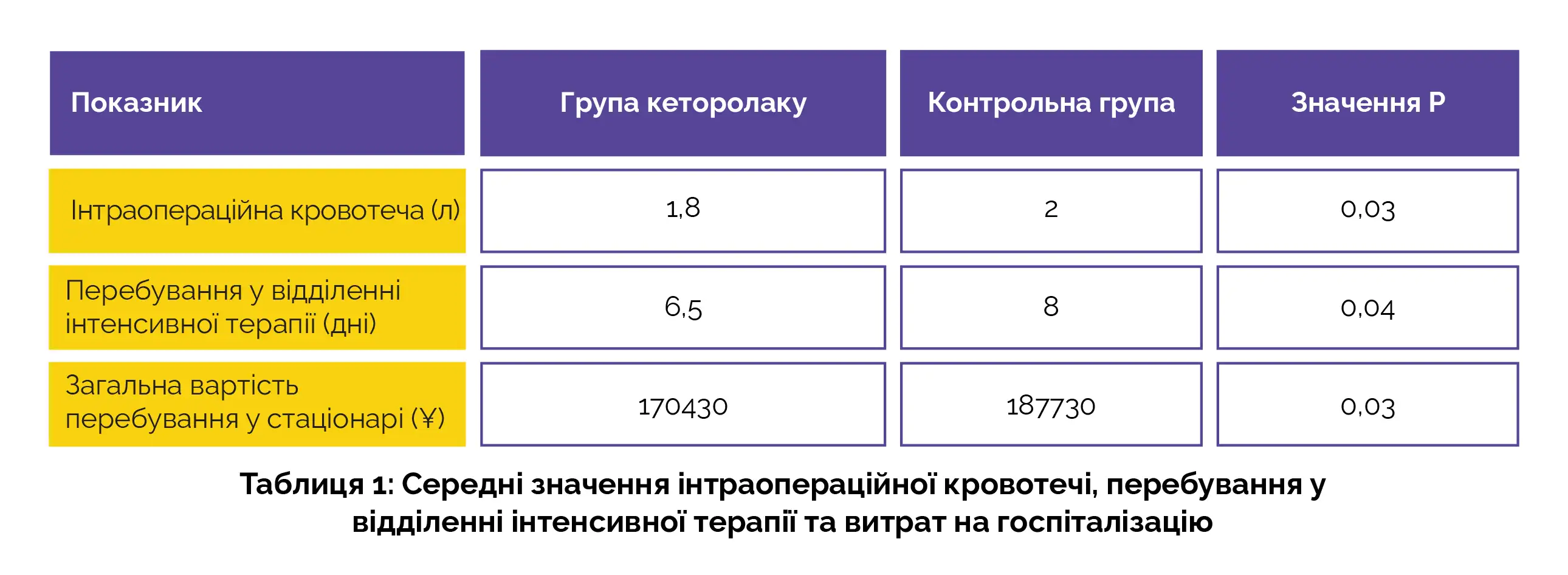
Хоча короткочасне застосування кеторолаку не вплинуло на смертність та порушення перфузії органів, воно було пов'язане з такою користю, як зниження крововтрати під час операції, скорочення тривалості перебування у відділенні інтенсивної терапії та зниження витрат на госпіталізацію. Результати підтверджують безпеку та потенційну цінність періопераційного застосування кеторолаку при лікуванні ГРАтА.
BMC Medicine
Ketorolac in the perioperative management of acute type A aortic dissection : a randomized double-blind placebo-controlled trial
Zhi-Kang Lv та співавт .











Коментарі (0)