

Categories
Change Password!
Reset Password!



Allergic rhinitis (AR) negatively impacts patients’ quality of life, often necessitating combination therapy for optimal symptom management.
Allergic rhinitis patients experience greater symptom relief and quality-of-life benefits with montelukast + antihistamine than with antihistamine alone.
Allergic rhinitis (AR) negatively impacts patients’ quality of life, often necessitating combination therapy for optimal symptom management. This study sought to scrutinize the effectiveness of combining montelukast with antihistamines versus antihistamine monotherapy in alleviating AR symptoms and boosting quality of life.
An extensive search of PubMed, Embase, MEDLINE, Scopus, the Cochrane Library, and Google Scholar was executed. Included studies directly examined montelukast + antihistamine with antihistamine monotherapy and stated outcomes on the Rhinoconjunctivitis Quality of Life Questionnaire (RQLQ) or nasal symptoms. Standardized mean differences (SMDs) were calculated, with subgroup analyses based on the type of antihistamine used.
A total of 15 studies comprising 2,882 volunteers were included. Combination therapy depicted remarkable improvements in daytime nasal symptoms, nighttime nasal symptoms, and RQLQ scores when compared with monotherapy (Table 1).
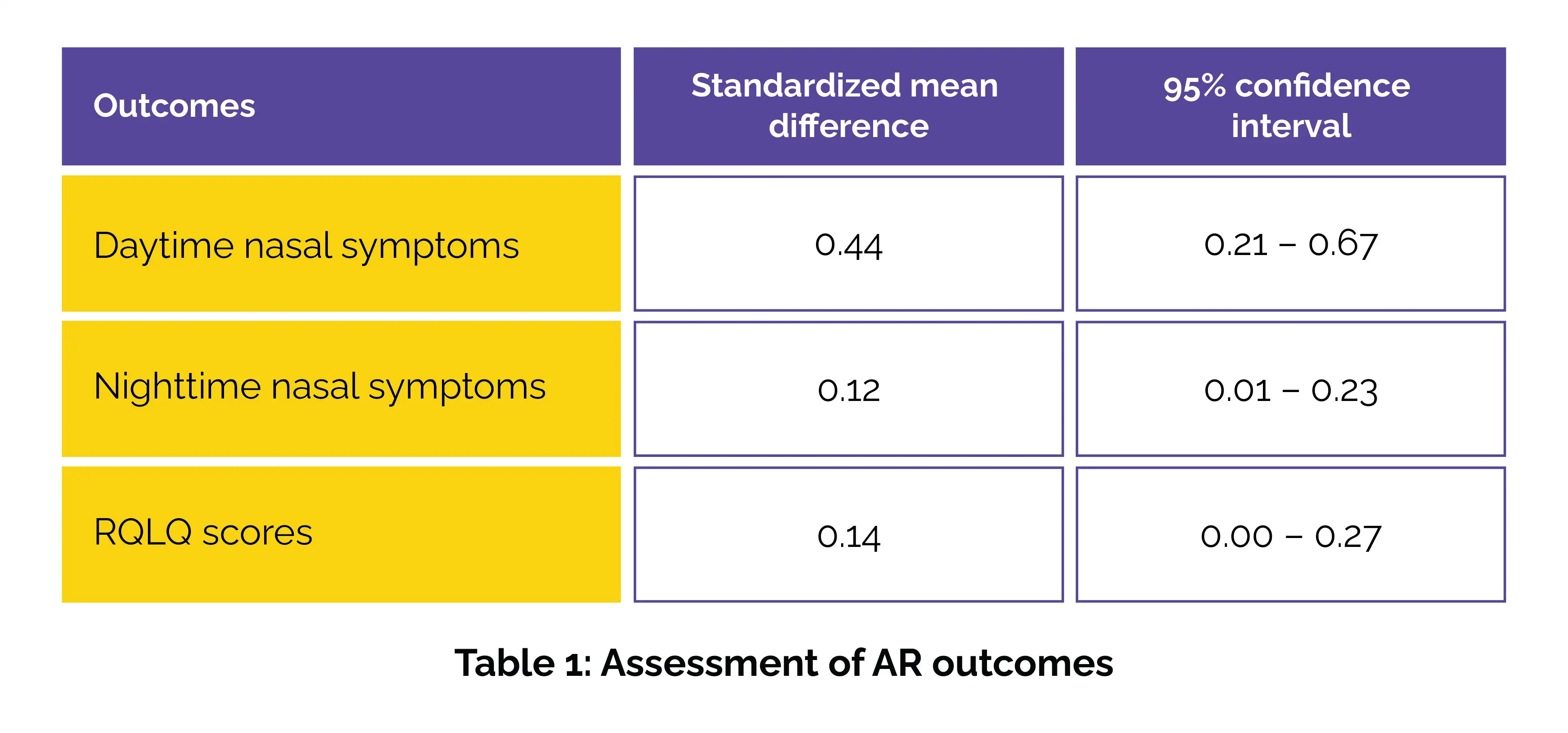
Notable reductions were noted in sneezing, nasal obstruction, and rhinorrhea, while nasal itching and ocular symptoms exhibited no pivotal change. Combinations involving desloratadine or levocetirizine offered greater symptom relief than those with fexofenadine or loratadine.
Adding montelukast to antihistamine therapy improves nasal symptoms and overall quality of life in AR. The degree of benefit varies with the specific antihistamine used, underscoring the importance of personalized treatment approaches for AR.
Clinical and Experimental Otorhinolaryngology
Efficacy of Montelukast-Antihistamine Combination Therapy Compared with Antihistamine Monotherapy in Allergic Rhinitis: A Systematic Review and Meta-Analysis
Ji-Sun Kim et al.













Comments (0)